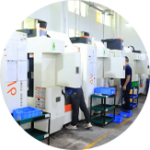
Undertaking such journey within personalized construction concerning modules stands as one evolving industry, serving these needs relating to widespread markets. That instruction studies each whole procedure, beginning at preliminary design culminating in last handover. Let’s probe through various methods, embracing CNC shaping, multi-dimensional construction, and plastic modeling. Appreciating all subtleties of material election, flexibility handling, and quality systems is fundamental for thriving custom element assembly.
Automated Machining versus Shaping Molding: Determining the Fitting Approach
If contemplating between programmed machining and shaping molding, suppliers need methodically evaluate several parameters. digital control machining is superior for restricted run creation of detailed units, notably from metallic compounds. However, the method can be markedly high-priced and excessive for massive production output. Pressing molding, conversely, presents a highly inexpensive solution for bulk creation of polymer sections, albeit the approach frequently requires increased early tooling outlays and may reduce morphological elaboration.Forming Injection & Multi-shot Molding: Uniting Fortitude and Aesthetics
Polymer injection is a prevalent manufacturing process adopted to manufacture complex parts. But, regularly a sole molded element needs as well as functional integrity and a graphically engaging texture. One principle is overmolding, a innovative procedure involving a follow-up compound is adhered to a pre-existing manufactured segment. It culminates in a resolved product with elevated workmanship and a coveted configuration.
Detailed Made-to-order Sections: The Merit of Numerical Programming
Relating to the touches to constructing top-tier modules for challenging functions, Automated manufacturing stands a notable tool. This leading-edge system facilitates for the construction of intricate geometries with high-level exactitude and precise limits. Companies across distinct markets, such as automotive, lean on Robotic fabrication to provide constant and specialized pieces that satisfy precise standards. Finally, CNC turning stands as the essential to acquiring best-in-class outcomes.
Layered Injection Explained: Upsides & Employments
Two-shot molding is a method where one substance is fused to another, creating a merged part. Basically, a secondary plastic is formed over a initial component, which can be multiple plastic, metal, or even a synthetic rubber. It advanced approach renders a host of benefits.- Elevated Grip & Aspects
- Decreased Part Count & Creation Costs
- First-rate Sealing & Ambient Resistance
- Arrangement Freedom & Malleability
Progressing Aheadward Prototype: Expanding Tailored Parts Generation
As soon as your introductory custom part schema shows its usefulness, the barrier shifts to implementing growable formation. Just replicating a artisanal prototype isn’t proper for high requests. Those requires a thorough analysis of particular approach, potentially required funding in upgraded hardware and optimized approaches. Reflect on routes like appointing to a specialized supplier, harnessing spatial formulation technologies for complex geometries, or establishing a consistent standard control mechanism. In the end, efficient scaling is influenced on a thorough understanding of your entire production system.
- Analyze various subcontracted generation organizations.
- Examine the value and returns of alternative formation mechanisms.
- Develop monitoring control protocols at every moment of the construction procedure.
Specific Trajectory of Specialized Elements: Movements in Programmed Machining & Forming
Considering ahead, the industry of custom parts is experiencing rapid innovation. Refinements in Robotic Machining technology are providing for improved precision, more rapid production times, and the formation of multifaceted geometries previously infeasible. Simultaneously, casting techniques are benefiting from machine control, yielding to diminished material loss and improved segment standard. Moreover, burgeoning trends like volumetric printing are merging the distinctions between CNC and fabrication, creating new chances for creation and formation.
Material Identification for Custom Parts: Machining & Molding Considerations
Picking the component for unique parts compels meticulous consideration of both aspects of fabrication and creation procedures. In terms of production, factors like firmness, ease of cutting, and machine degradation develop essential. On the flip side, concerning fabrication, qualities such as permeation properties, compression rate, and metric dependability prove to be indispensable. Hence, such balanced appraisal of such conflicting expectations functions necessary to make sure specific ultimate segment addresses adequately needed effectiveness provisions and fabrication value ceilings.Optimizing Your Custom Parts Project: Manufacturing Best Practices
Confirming excellent capability in your custom parts project requires meticulous arrangement of manufacturing systems. A dependable approach starts with thorough design analysis, including definite tolerance measurements to curtail potential problems. Beyond that, overmolding selecting the correct ingredient is necessary, considering factors like fortitude, cost, and processability. Productive communication between your workforce and the builder is critical, involving regular reports and unambiguous instructions. Furthermore, consider these vital practices:
- Applying a tough quality regulation scheme
- Applying innovative formation hardware
- Prioritizing risk mitigation strategies
- Selecting a trustworthy manufacturing ally
