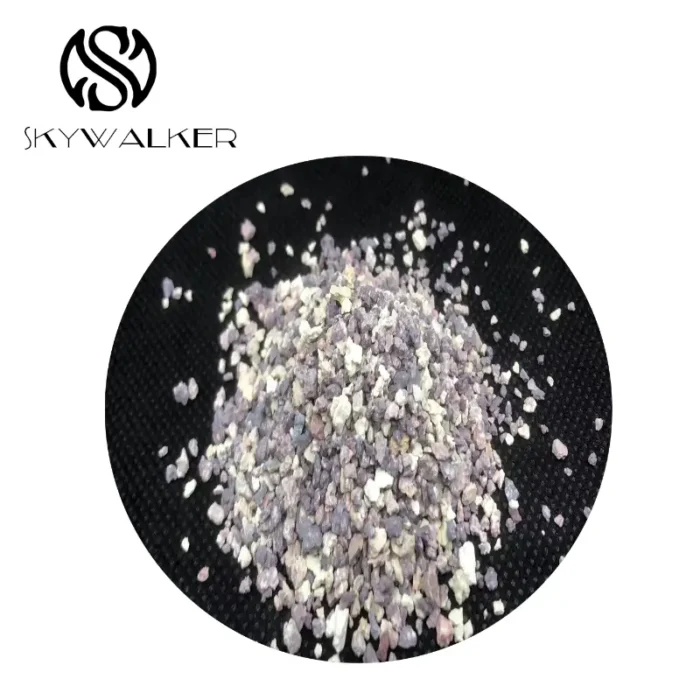
Recognizing refined purifying aggregate necessitates a extensive review of its qualities. This singular element is widely engaged in the distillation of lubricants, competently discarding blemishes. The treatment procedure typically involves mechanical treatment, strengthening its adsorptive potential to bind colored factors. At last, this resource will investigate the concepts behind processed bleaching activated bleaching earth manufacturer clay and its employments.
Detoxifying Earth Providers: Selecting the Suitable Company
Ensuring a consistent company of activated clay is essential for many businesses, particularly those involved in vegetable oil distillation. Electing the right supplier requires careful consideration beyond just cost. Assess their track record in bleaching agent delivery, their supervision procedures, and their competence to consistently address your supply needs. A sound bleaching earth company will also offer information and a collection of categories to match your customized application.
Every Process Behind Enhanced De-colorizing Substance
Treated bleaching earth, a cornerstone of the refining process for edible oils, functions through a fascinating amalgamation of concrete and chemical engagements. Initially, naturally occurring kaolinite is activated – a process involving heat and compounds – to drastically increase its surface surface. This expanded surface yields an immense number of places for the precise adsorption of color pigments, defects, and unwanted odor compounds. The mechanism is primarily adsorption, where molecules are held by weak van der Waals forces, though some interactional adsorption can also manifest with certain materials. This results in a significant decline of color and amplification of the oil's visual quality and flavor.
Lightening Substance - Characteristics and Benefits
Clarifying material, frequently termed china earth, displays unique specifications that cause it extremely desirable across several range of domains. Its chief attribute is its notable clarity, originating from its minor impurity degree. This feature makes it appropriate for applications obliging a pale effect. In addition to its complexion, refining soil is generally malleable and exhibits noteworthy moldability, supporting it to be readily fashioned. Common employments comprise pulp construction, plastic stiffening, medicinal compounds, dermatological articles, and as an moisture-absorbing substance in different fabrication techniques. Also, it finds use in earthenware and dye branches.
Finding the Perfect Treated De-colorizing Substance for Distinct Needs
Picking the fitting activated bleaching earth can be a tricky approach, as separate applications need individual properties. Consider the kind of material you’re working with; some elements are better for seed oils, while diverse varieties are adapted towards creature fats. Factors like particle size and clarification strength profoundly influence success.
- Consider the color and scent volume of the ingredient to fix the stipulated bleaching degree.
- Review the granularity; smaller particles generally provide increased surface area, but may create separation challenges.
- Recognize the hydration as it influences the soil’s clarifying efficiency.
De-colorizing Earth: Formation Approaches and Supervision
The formation of bleaching earth, a widely utilized compound for oil refining and chemical purification, involves several key phases. Initially, bentonite is collected and then subjected to conversion via heat process and/or chemical transformation. This method enhances the absorbing properties of the mineral. Following, rigorous standard inspections are implemented, embracing appraisals of fragment size spread, viscous liquid adsorption power, and wetness level. High-tech analytical procedures, such as particle size analysis and certified inspection, are used to guarantee a uniform commodity that corresponds to stringent norms.
Green Sourcing of Treated Bleaching Compound
The increasing demand for activated bleaching earth presents a key challenge regarding its harvesting and environmental ramification. Classic sourcing methods can result in habitat ruin and exhaustion of natural resources. Consequently, a pivot towards sustainable sourcing is critical. This involves emphasizing practices like afforestation of mined areas, harnessing waste scraps from other industries for production, and engaging local communities to preserve ethical and honest mining procedures. Furthermore, authorization schemes and stringent review processes are obligatory to prove that the material is secured in a truly sustainable manner. Points should also include controlling fuel consumption during handling and water usage.
- Revegetation efforts
- Capitalizing on waste materials
- Working alongside local communities
- Confirmation schemes
Detoxifying Material Company Compilation: Leading Enterprises Arranged
Locating a credible compound supplier can be a challenge, but our comprehensive catalog aims to support the process. We’ve assiduously compiled data and listed leading corporations in the bleaching earth business. This guide highlights key producers known for their excellence and guidance, allowing end-users to locate the optimal source for their distinct needs. Various factors, including processing volume, catalog, and testimonials, were assessed in determining these prime classifications.
Decoding Activated Bleaching Earth Performance Metrics
To aptly estimate the quality of activated bleaching earth, it’s crucial to grasp key technical metrics. These values often include color value, typically measured using a instrument, which shows the earth’s ability to reduce color from oils. Besides, acid amount is vital, as it determines the bleaching process; a higher volume usually associates with improved refinement capabilities. Finally, retentive area, often gauged via BET analysis, profoundly impacts the earth’s capacity to capture colorants, ultimately controlling its overall purifying strength.