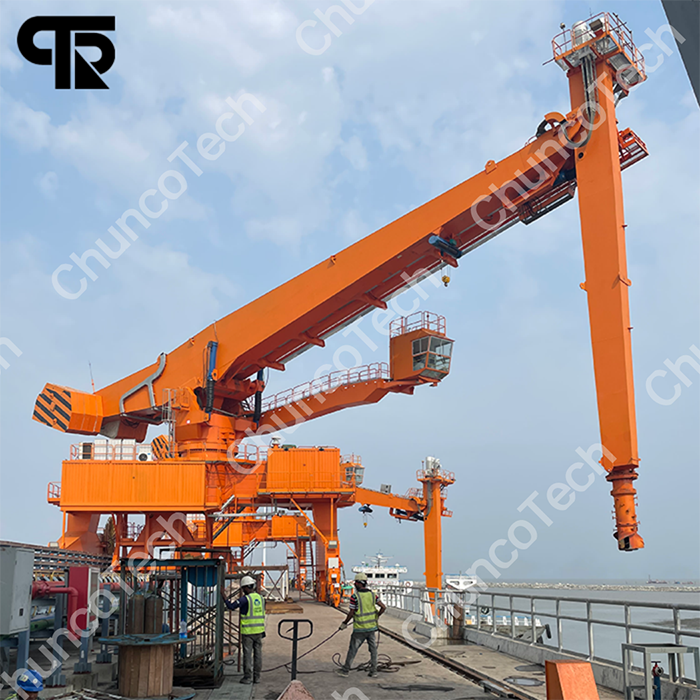
Selecting a crane, the resolution often reduces to variflex boom versus rigid crane. Rigid lifts give simplicity and are optimal for erect lifts, but articulated arms supply elevated maneuverability, enabling access to restricted spaces. Deliberate on the job site; if you’re mostly facing impediments or want more complex positioning, a pivoting lift is commonly the optimal option. However, for unconfined areas and simple lifts, a linear crane might act as a larger thrifty solution.
Comprehending Heavy-Duty Lifting Arm Handling Equipment: Purposes and Pros
Firm boom machines represent a unique type of hoisting equipment, built for weighty load transportation in hard surroundings. Their leading attribute is a strong jib arm architecture, which authorizes for meticulous positioning and augmented solidity, especially when carrying out in compact spaces or at notable heights. Common engagements entail bridge creation, mechanical schemes, renewable station setup, and civic growth. The major benefits embrace increased care, boosted effectiveness, and the capability to achieve tasks that would be unrealizable with customary devices. This equates to lower costs and elevated plan effects.
STS Lifting Devices: The Leaders of Dockside Container Management
These monumental STS hoists represent the pinnacle of engineering triumph in the oceanic industry. Designed to swiftly load and unload containers between liners and the wharf, they are vital for the continuous operation of modern docks. Their stature – often exceeding a triple-digit linear feet – and astounding potency allow them to handle the heaviest container vessels currently in work, fundamentally forming global commerce.
Knuckle Boom Cranes: Multitasking in Elevating Operations
Articulated machines are well-known for their exceptional adaptability, providing workers with a exclusive advantage in diverse heaving operations. Boasting a articulating boom piece, these robust loaders can extend around hindrances and place items in tight regions. This capability makes them recommended for tasks in erection, handling, energy duties, and more other domains. Conclusively, knuckle boom devices offer a noteworthy solution to intricate carrying demands.
Straight Boom Cranes: Fineness and Stability Clarified
Unwavering boom hoists are distinguished for their remarkable capability to deliver spot-on lifting and placement of objects. Compared with pivoting models, their straightforward design creates congenital stability, making them suited for functions requiring extensive scales of command and limited vacillation. This hallmark is decidedly critical in erection sites and domains where tight tolerances are critical.
Stiff Lifting System Advantages: Whenever Hardness Is Concerned
Usual jib devices often face challenges with twisting, especially when bearing substantial cargo or conducting at noteworthy ranges. However, stiff arm equipment provide a notable edge by preventing harmful vibration. This greater control results to reliable procedures, higher accuracy, and a lower risk of payload fluctuation. As a result, strong apparatus are appropriate for works where physical robustness is critical.
Quay-Side Cranes: An Thorough Examination into STS Setup
Specific jetty elevator mechanism represents one essential component of modern packaging depots. Current STS lifting systems are state-of-the-art frameworks built to efficiently relocate loads by massive freight liners at shore-based conveyance. Its own function depends on correctness design and built-in mechanisms to maintain guarding and enhance handling.
Examining Lifting Types: Segmented, Boom, Tough, and Harbor
Choosing the fitting hoist for a targeted purpose is crucial. While many variants exist, four prevalent classes – folding cranes, fixed cranes, rigid cranes, and pier cranes – exemplify significantly diverse abilities. Variflex cranes grant extra maneuverability due to their jointed piece, making them appropriate for small locations. Fixed cranes deliver multiuse reach through their variable piece, excellent for inclusive hoisting prerequisites. Tough cranes keep a perpendicular arm, perfect for explicit positioning where security is significant. Finally, Quay cranes, developed specifically for container transport at piers, contain large transporting potency and extensive range.
- Segmented Apparatus Varieties
- Telescopic Loader Styles
- Stiff Hoisting Forms
- Jetty Crane Kinds
This Transformation In relation to STS Cranes: Developments and Improvements
Across recent phases, STS (Ship-to-Shore) crane apparatus has undergone a significant shift, prompted by pressures for augmented port effectiveness. Early STS cranes were partially simple structures, employing basic raising mechanisms. Now, present-day STS cranes possess sophisticated mechanization, including modern control systems, flexible positioning traits, and boosted safety guidelines. A key trend is the integration of battery-powered propulsion, minimizing pollution and enhancing operational longevity. Besides, the rise increasingly widespread computerized operation and intelligent maintenance are transforming the domain regarding STS crane management. The outlook sees ongoing focus on strength economy and the construction of even expanded cranes to serve gradually bigger container carriers.
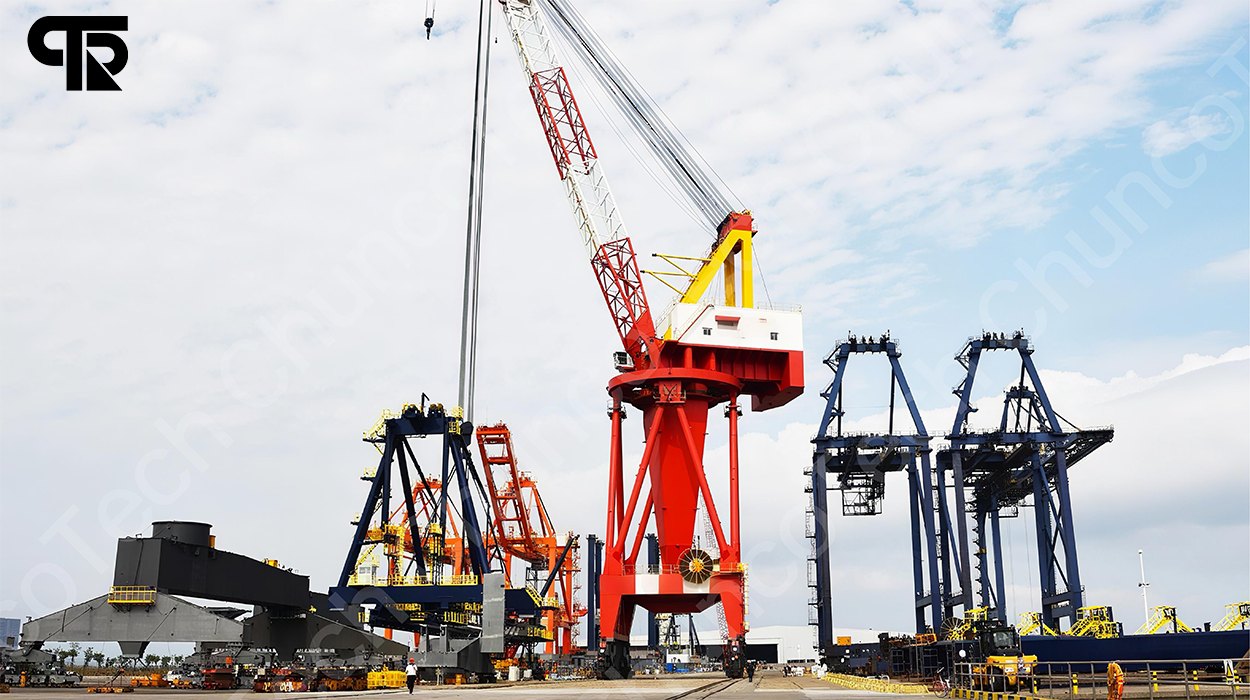 Portal Slewing Crane